Learning to swim as an adult in New York: what the first lesson covers
Before you book, it helps to know exactly what happens in the water, step by step, and why the steps come in that order.
October 27, 2026 · 3 min read
Most adults who book a first swim lesson spend the week before it picturing the worst version. Everyone else in the pool is a strong swimmer, the instructor stands on the deck with a stopwatch, and you are asked to do something you cannot yet do.
That is not how a beginner lesson at AquaSkills goes, and it helps to know the real order of things before you walk in. Here is what the first steps look like, as the school describes them, and why they come in the sequence they do.
The first hour is a real class, not a sales pitch
AquaSkills starts everyone with a one-hour intro class. It costs $98 per person and can be private or semi-private. After it, you decide whether a package makes sense. The school states that you are not obligated to join, and there is no membership to buy.
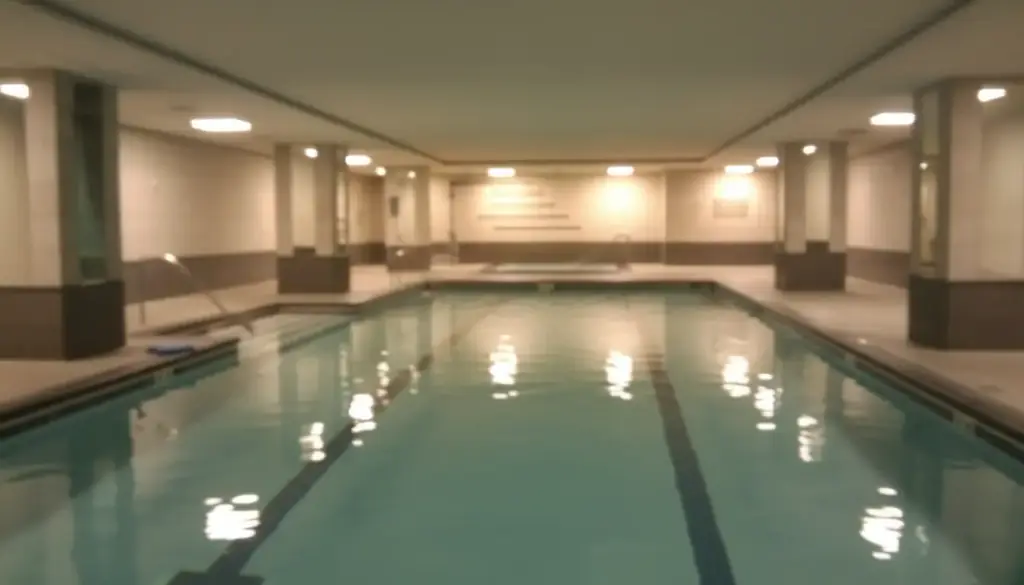
The pool is at 88 Fulton Street in Lower Manhattan. It is 15 feet wide and 60 feet long, heated to about 88°F. The size matters more than it sounds. A narrow pool is easy on a nervous person because you can see the wall wherever you stand, and you are never far from the edge.
Breathe in above the water, breathe out in it
The first item on the school's list of first steps is learning to inhale above the water and exhale in the water. Nearly everything else in swimming rests on it.
Here is the craft behind it. When a beginner's face gets wet, the natural reaction is to hold the breath. A held breath makes the chest tight and the body stiff, and a stiff body sinks in awkward places. Slow exhaling, even a few bubbles at a time, undoes that. Once the out-breath is steady, the in-breath takes care of itself.
Breath control comes next, and it is mostly repetition. You blow bubbles at the surface, then with your mouth under, then with more of your face down. Nobody times you. The school says everyone moves at their own pace, and a step stays on the menu until it feels ordinary.
Walking through the water teaches balance
Before any floating, you walk. Moving through the water, you feel how it pushes back, how your body leans, and how easily you recover when you wobble. The school lists walking through the water and balance as part of the first steps, followed by resistance.
Resistance is simple to describe and strange to feel the first time. You press your hands and arms against the water and notice that it holds you up and slows you down at once. Adults who learn to feel that early usually stop thrashing, because they stop fighting something that is, in fact, helping them.
Floating face down and on your back, then gliding
Floating comes in two forms. Face down, you lie flat, let your head relax, and let your breath go out slowly. On your back, you look at the ceiling, let your ears sit in the water, and let the air in your lungs help hold you up. Neither is a trick. Both are positions the body will keep if you stop trying to hold yourself up.
Gliding is the first time you travel without kicking or pulling. You push off, stretch long, and coast a few feet on the push alone. For many adults this is the moment it sinks in that the water will carry them.
The instructor is in the water with you
AquaSkills instructors get in the pool and teach by demonstrating, instead of calling directions from the deck. In a first lesson that means a steadying hand during the float and a person right beside you for the glide. Lori Pailet, the school's director, conducts classes in New York City herself. The school says its instructors are American Red Cross certified lifeguards, with CPR, AED and First Aid training.
What comes after the first class
If you continue, the school's adult beginner course builds on those first steps with floating techniques, treading water with sculling hands, breaststroke, freestyle with breathing, and two styles of backstroke. The goal the school states is swimming a distance without flotation devices while coordinating your breathing with your movement. Packages come in 6, 10 and 20 session sizes. Package prices are not posted online, so you ask by text after your intro class.
You do not need to be able to do any of this beforehand. You need a towel, flip-flops, and the willingness to start with the simplest step.
To book the $98 intro class, text (646) 724-7024.
AquaSkills, (212) 206-6976
Call (212) 206-6976More articles
Fear of water is usually about one moment: putting your face in
You may be fine standing in the water. The trouble starts when your face goes under, and that can be taught one small step at a time.
Why your swim instructor should be in the water with you
Teaching from the deck works for strong swimmers. For a beginner, it helps to have someone beside you in the water.