Fear of water is usually about one moment: putting your face in
You may be fine standing in the water. The trouble starts when your face goes under, and that can be taught one small step at a time.
October 27, 2026 · 3 min read
Ask an adult who is afraid of water what exactly frightens them, and the answer often narrows quickly. It is rarely the pool, or the depth, or the splashing. It is the moment the face goes in.
One student put it this way in a testimonial published on aquaskills.com: "When I began I had a pretty bad fear of water, mainly getting my head underwater." Plenty of people would sign their name under that sentence.
Why the face is such a loaded moment
Your face is where most of your senses live. When it goes under, you lose clear sight, sound changes, and water touches your nose. Breathing, which you never think about, suddenly becomes a decision. The body reads all of that as a warning, and it answers with a gasp or a clench.
That reaction is not weakness. It is an old, sensible reflex doing its job in a place where it does not apply. The fix is not bravery. The fix is giving the reflex a series of small, safe experiences until it stops sounding the alarm.
A lesson that never forces the moment
AquaSkills says its instructors specialize in teaching people who fear the water. The method it describes starts with a one-hour intro class, then a decision about package size, and it says everyone moves at their own pace. The first steps it lists are learning to inhale above the water and exhale in it, breath control, walking through the water, resistance, floating face down and back, and gliding. The school also mentions relaxation techniques and basic water principles.
Notice what that list does not do: it does not ask you to go under before you can breathe out. The face-down skills come after you have practiced breathing out, which is the order that makes sense. If you know how to let the air go, putting your face in is no longer a leap into nothing.
How a face-in progression usually looks
This is general swim-teaching craft, not a script from any one school, but it is a common way to break the moment into pieces:
- Wet your hands and splash a little water on your face while standing.
- Lower your chin to the surface and hum, so air is leaving the body.
- Put your lips in and blow bubbles, then your nose and lips.
- Put your whole face in for one breath out, then lift and breathe in.
- Add goggles and open your eyes, so the water stops being a blur.
Each rung can take one lesson or ten minutes. What matters is that you stay in control of when you move up. AquaSkills keeps loaner caps and goggles at the pool, and new ones are available to buy, so you can try goggles without committing to a purchase first.
Warm water and a quiet pool help
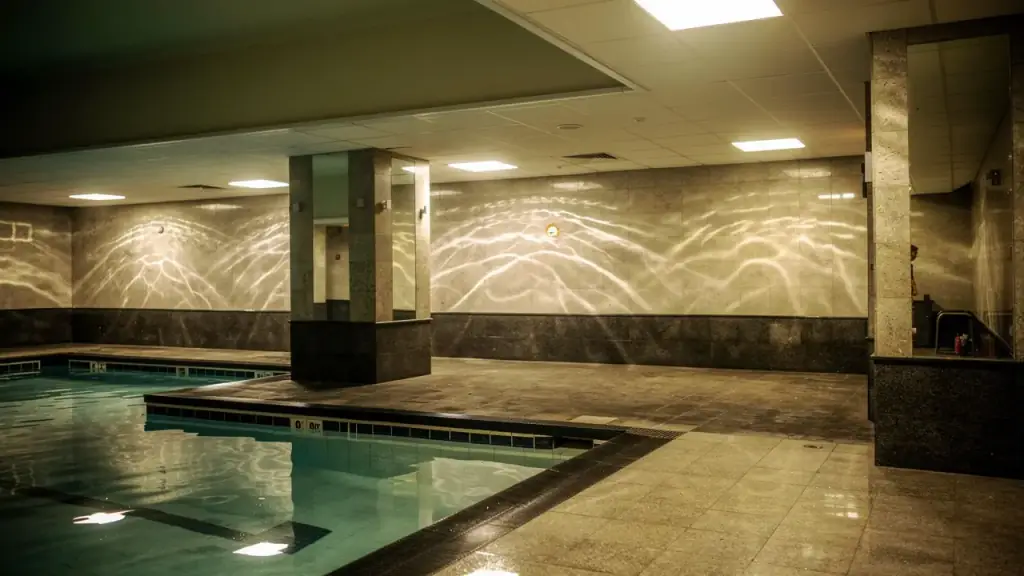
Cold water makes everyone tense, and tension makes fear louder. The AquaSkills pool at 88 Fulton Street is heated to about 88°F, and at 15 feet by 60 feet it is a small, contained space. For someone who is already on edge, a pool you can take in at a glance is easier than a big open lap hall.
The school lists its private format, with one student, one instructor and a flexible schedule, as the one for fear of water. Its mini-group format is not meant for people with a fear of water, which makes sense, because a fear lesson needs the instructor's full attention on you.
What students say it felt like
The same student whose words open this article went on: "After the 3rd class I was much more comfortable and in a couple months (taking 1 to 2 classes a week) I feel much more confident in the water." That is one person's experience, published on aquaskills.com, and not a promise about yours. People move faster or slower, and the pace is meant to be yours.
If your own fear lives in that one moment, the first lesson is a low-stakes way to find out how small the moment can be made. The intro class is $98 per person, and you are not obligated to join afterward.
To book the intro class, text (646) 724-7024.
AquaSkills, (212) 206-6976
Call (212) 206-6976More articles
Learning to swim as an adult in New York: what the first lesson covers
Before you book, it helps to know exactly what happens in the water, step by step, and why the steps come in that order.
Why your swim instructor should be in the water with you
Teaching from the deck works for strong swimmers. For a beginner, it helps to have someone beside you in the water.